
Curriculum / Geography
"There is no better compass than compassion. We find ourselves not by being the most seen, but the most seeing." Amanda Gorman (Poet & Activist)
At The Leys, Geography is more than just a subject; it is a vital catalyst for a child’s personal development and their role in wider society.
Building Empathy: By exploring case studies from El Salvador to China, our children develop a profound respect for different cultures. They learn to see the world through the eyes of others, fostering a sense of global compassion and understanding.
Developing Critical Agency: In a complex world, Geography gives children the data-driven tools to think for themselves. They learn to analyze evidence, understand the "why" behind the headlines, and move from being passive observers to active problem-solvers.
Resilience & Character: Through our developing fieldwork and outdoor exploration—whether navigating at PGL or investigating local land use—pupils build resilience and adaptability. They learn to cooperate, take risks, and appreciate the physical world that sustains us.
At The Leys, we are not just teaching children about the world; we are preparing them to lead and protect it.
At The Leys, we aim to inspire children to explore both their local environment and the wider world. We foster a passion for Geography by developing a deep understanding of diverse places, their unique features, and their characteristics.
Through purposeful fieldwork, we are taking learning beyond the classroom. By observing and exploring the world firsthand, pupils start to work like Geographers, building the foundational skills used in careers such as environmental science, urban planning, and conservation.
As our children grow, we strive to empower them to become knowledgeable, active citizens who understand their community and recognize the positive impact they can have on the world.
What we want children to know, remember and be able to do in Geography by the end of each phase.
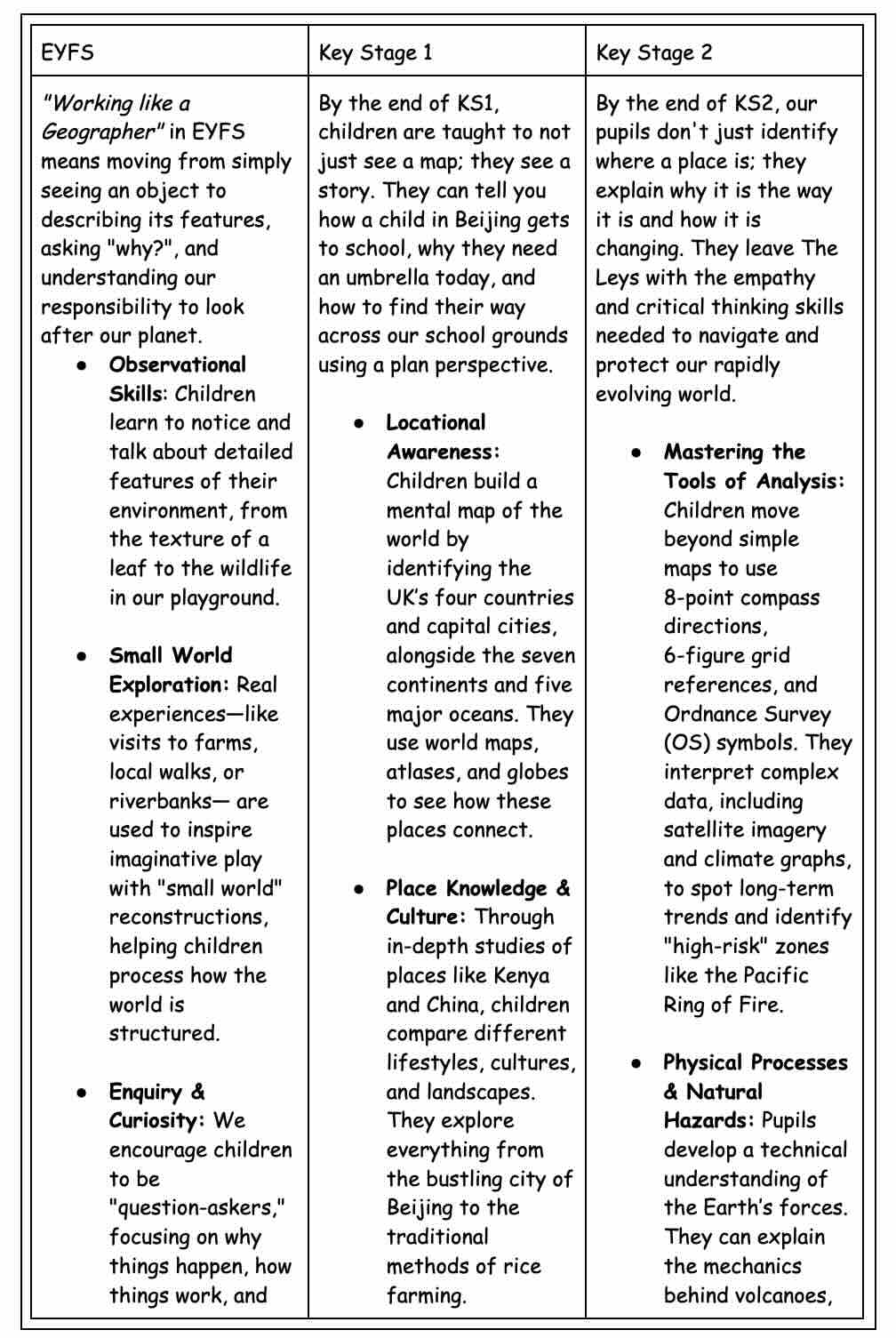
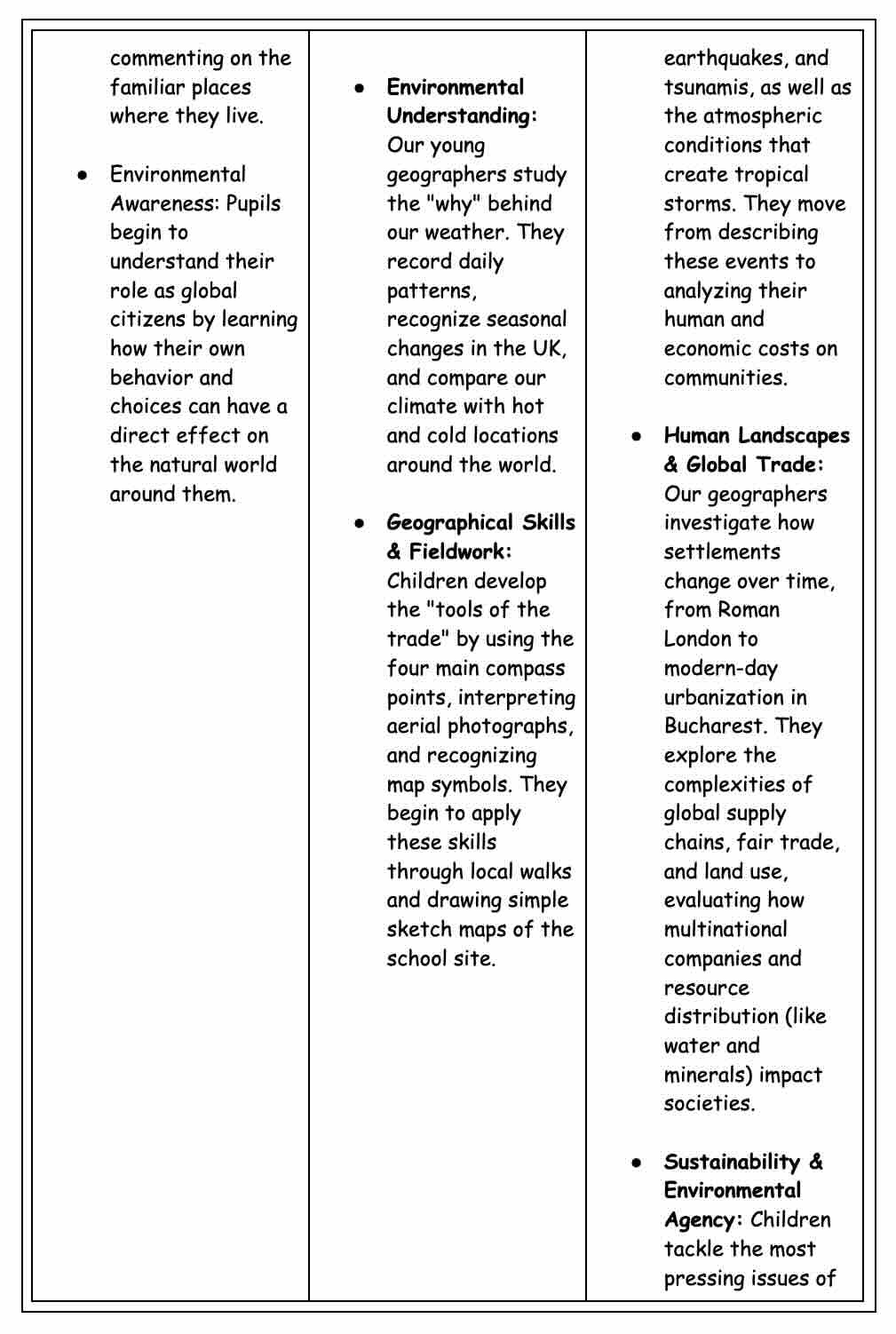
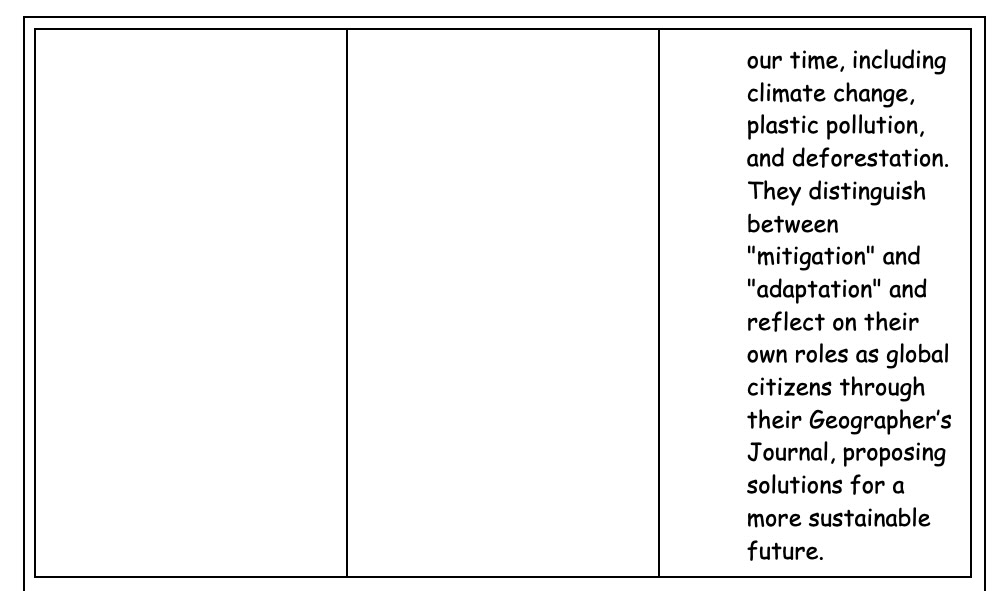
Geography at The Leys is delivered through a high-quality, sequenced curriculum that builds on prior learning. We implement this through a mix of classroom-based enquiry, case study analysis, and practical fieldwork.
Diverse Case Studies
We use carefully selected case studies—ranging from the urban streets of Beijing to the landscapes of El Salvador—to broaden children’s views of the world. These studies are not just about locations; they are about perspectives. We challenge pupils to look through the eyes of others, whether they are farmers in Kenya or residents in a volcanic region like Sicily, helping them develop empathy and a deep understanding of human experience in different contexts.
Fieldwork: Learning in Action
As we develop our fieldwork provision, we are moving learning beyond the classroom walls. By engaging in first-hand observation and data collection within our local community, children bridge the gap between theory and reality. This practical approach allows them to "think like a Geographer," using tools and techniques that prepare them for future study and diverse career pathways.
Enquiry Based Learning
Each unit is framed around a geographical question that encourages critical thinking. Pupils use a wide range of resources—including digital mapping, aerial photography, and the Geographer’s Journal—to investigate these questions. This ensures that children are not just memorizing facts, but are actively analyzing the relationship between people and their environment.
We ensure every child can see themselves as a Geographer. For a SEND student, this might mean using a tactile model of a volcano; for an EAL student, it's a dual-language map of China; and for a PP student, it's ensuring they have the correct gear to lead an investigation.
Cognitive Overload
Complex geographical processes (e.g., the water cycle or tectonic plate movement) can be overwhelming if presented only through dense text.Subject inclusion document
Multi-Sensory Mapping
Using tactile maps, 3D models, and physical props like "picture frames" to help pupils focus on specific map sections.
Tier 3 Vocabulary
Geography is heavy with subject-specific terms (e.g., interdependence, longshore drift) that may not have direct equivalents in a student's home language.
Scaffolded Reading
Using paired reading and simplified "multi-version" texts that maintain high geographical rigor without complex sentence structures.
Abstract Concepts
Understanding cultural nuances or regional differences through English-only instruction can be difficult.
Visual Glossaries
Using dual-language word mats and images to accompany key terms.
The 'Experience Gap'
Some children may have had fewer opportunities to travel or visit diverse landscapes, making global case studies feel more abstract.
Experience - First Learning
Prioritizing high-quality first-hand experiences (like local walks) and using high-quality virtual reality (VR) or video to bring distant places to life in the classroom.
Financial Constraints
The cost of specialized equipment, appropriate outdoor clothing, or voluntary contributions for fieldwork.
Subsidy & Support
Using Pupil Premium funding to reduce the costs of field trips, equipment, and travel to ensure full participation.
At The Leys, we equip our pupils with the skills, knowledge, and curiosity to become independent learners who truly understand their place in the world. Our curriculum ensures that by the time children leave us in Year 6, they don’t just have a collection of facts; they have a geographical toolkit for life.By the end of Year 6, our pupils:
Are Global Citizens: They possess a rich knowledge of the United Kingdom and a deep, empathetic understanding of diverse global cultures and landscapes.
Are Skilled Practitioners: They are confident using a wide range of technical tools, from 6-figure grid references and compass work to practical fieldwork techniques.
Are Critical Thinkers: They act as researchers who can analyze complex global issues—such as sustainability and climate change—using data and personal observation to form their own perspectives.
Are Agents of Change: They recognize how environments change over time and understand that their own actions and choices have a direct impact on the future of our planet.
At The Leys, we believe that Geography should be felt, seen, and experienced. Our enrichment program ensures that children see the relevance of their learning in the world around them.
Global Awareness & Sustainability
We don't just talk about change; we invite experts to help us lead it. Throughout the year, we welcome specialist visitors to discuss the "3 Rs"—Reduce, Reuse, and Recycle—giving children practical ways to champion sustainability. Our annual Earth Day celebrations further ignite this passion, as the whole school joins together to focus on environmental stewardship and our responsibility to the planet.
Global Awareness & Sustainability
We don't just talk about change; we invite experts to help us lead it. Throughout the year, we welcome specialist visitors to discuss the "3 Rs"—Reduce, Reuse, and Recycle—giving children practical ways to champion sustainability. Our annual Earth Day celebrations further ignite this passion, as the whole school joins together to focus on environmental stewardship and our responsibility to the planet.
House Continents: A Sense of Belonging
Our House system turns global geography into a personal identity. Each of our Houses represents a different continent, and during our dedicated House Day, children dive deep into the culture, landmarks, and physical features of their specific region. This helps every child build a "home" connection to a different part of the world.
Geography on the Move: Trips & Residentials
Learning truly happens when we get our boots muddy. Our educational visits are carefully mapped to our Geography curriculum:
Local Wonders: Trips to places like Shepreth Wildlife Park allow our younger learners to observe animals and habitats firsthand.
Living History & Landscapes: Visits to Celtic Harmony and Wymondley Woods help children understand how early settlers interacted with the land and used natural resources.
The Ultimate Fieldwork: During our PGL and residential trips, children develop independence and navigation skills. They use maps in real-world contexts, observe physical landforms, and study the human impact on rural environments.

To support your child's journey as a geographer at home, here are some of the most engaging and reliable websites. We have selected these to align with our focus on world exploration, mapping, and sustainability.
Global Exploration & Wildlife:
National Geographic Kids (All Ages): A brilliant all-rounder for exploring countries, animals, and natural wonders. It’s perfect for the "Place Knowledge" we focus on in KS1 and KS2.
BBC Bitesize Geography (KS1 & KS2): The "go-to" for curriculum-aligned videos and games. It breaks down complex physical processes like volcanoes and the water cycle into digestible chunks.
World Geography Games (KS2): Great for building "Locational Knowledge." It tests children on continents, oceans, flags, and mountains through interactive quizzes.
Mapping & Satellite Imagery:
Google Earth: An incredible tool for our "View from Above" work. Children can "fly" from The Leys all the way to Beijing or Sicily to see human and physical features firsthand.
Ordnance Survey (OS) Mapzone: Dedicated to teaching children how to read maps, use compasses, and understand grid references through games.
Sustainability & The Environment:
NASA Climate Kids: An excellent resource for our KS2 focus on climate change. It explains the greenhouse effect and renewable energy using clear, scientific data.
The Wildlife Trusts: Perfect for EYFS and KS1 "nature spotting." They offer great ideas for local fieldwork and identifying plants and animals in your own garden or local park.
Olympic Week Exhibition